Micro Futures Backtests Are Lying to You — Here’s the Fix
Turn unreliable micro data into robust strategies using this simple full-contract reference trick

One of the greatest advantages of trading futures is the opportunity for diversification. Simply put, it’s a game changer. By effectively spreading strategies across various unrelated markets, traders can create solid portfolios that yield improved risk-adjusted returns. However, there’s a catch: with limited capital, your options can dwindle rapidly.
Summary: Futures offer unmatched diversification benefits, but small capital quickly limits the available products.
True, the introduction of micro contracts in recent years has been a positive development. Yet, liquidity remains an issue. Many of these micro products struggle with trading volumes that are too low, which compromises the reliability of data needed for systematic trading.
Summary: Micro contracts expanded access, but low liquidity makes systematic trading unreliable.
Take micro Soybeans as a case in point.
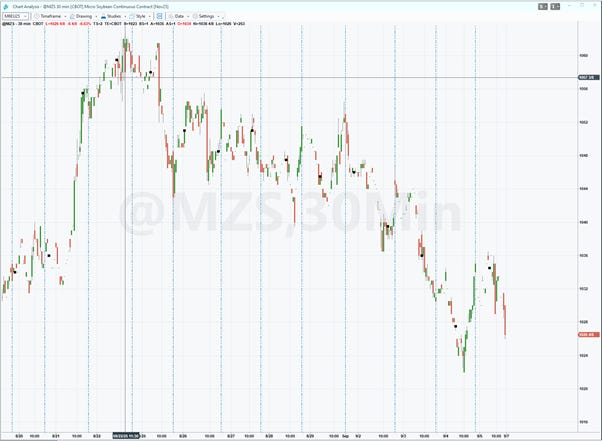
When you compare its performance with the full contract over the same period, the disparity is striking.
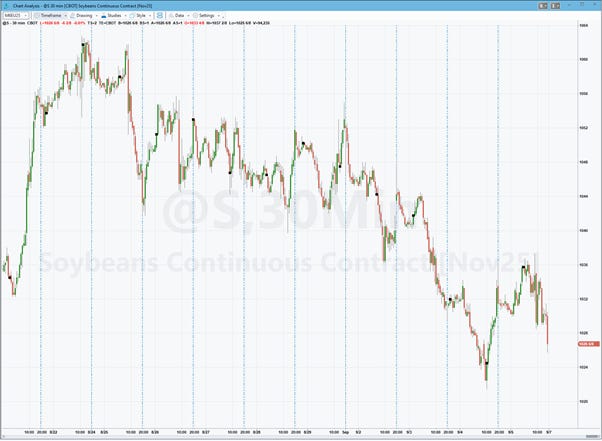
For systematic traders, gaps in data aren’t minor flaws; they can completely compromise backtests and results
So, what’s the workaround? I’ve discovered a straightforward technique to enhance accuracy while still utilizing smaller contracts: overlay the full contract as a secondary chart on the micro contract. Use the full contract as your reference for all strategic decisions—entries, exits, stops, and targets—while executing trades on the micro contract. It's a win-win.
Summary: The solution is simple: calculate decisions from the full contract, execute trades on the micro.
Let me share a practical example: I had my sights set on trading E-mini Natural Gas (QN). The challenge was its low liquidity compared to the full contract. My strategy relied on 30-minute and daily timeframes, so I decided to introduce a third data stream: the 30-minute full contract. I referenced this higher-quality data in my code while keeping the execution on QN.
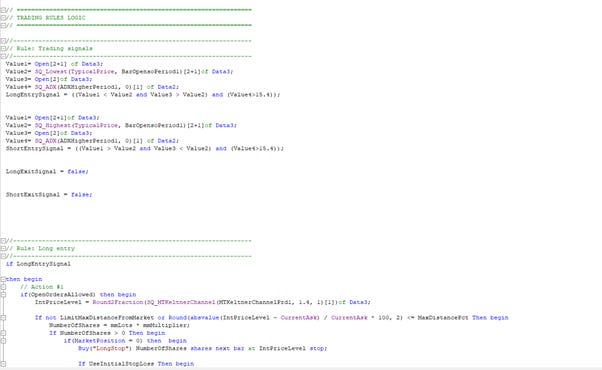
Summary: Example: by adding the full contract as a higher-quality data stream, execution on QN became more reliable.
The outcome? The equity curve tracked closely with the strategy based on the full contract.
(Full Contract and results)
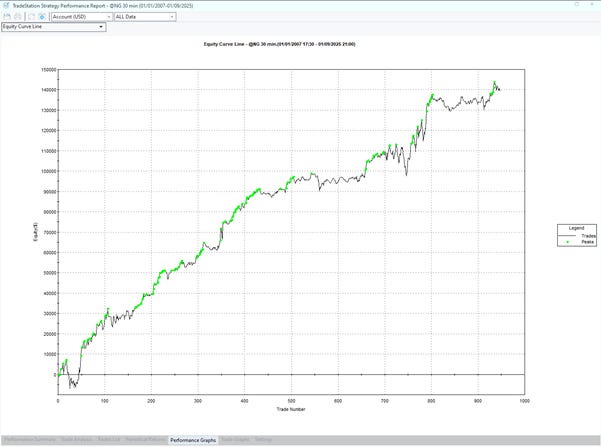
Strategy deployed on QN (Emini natural gas) with updated code
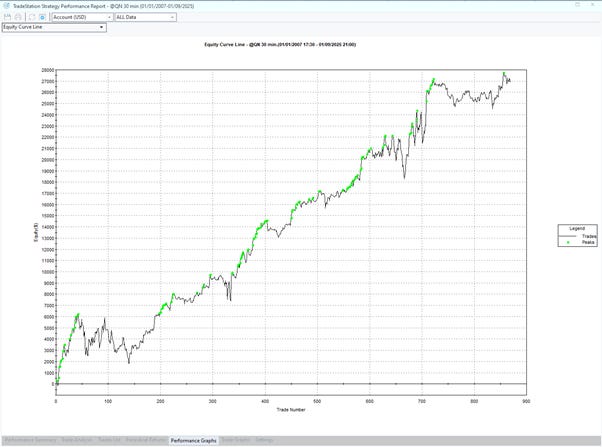
While they weren’t identical (expect more slippage with low-volume products), the correlation between the curves was extremely high. This marked a significant improvement over simply running the strategy on QN without the full contract reference.
Summary: Results showed strong correlation with full contract performance — much better than QN alone.
If you’re engaged in trading micro indices like NQ or ES, consider trying this method. Incorporate the full E-mini as a secondary data stream, tweak your code to reference it, and carry out your trades on the micro contract. The boost in accuracy will be immediate.
While this approach won’t erase the challenges of thinner markets, it does elevate your strategies closer to full contract accuracy.
Summary: Apply this to indices like ES/NQ — you’ll gain accuracy and edge without needing big capital.
🔑 Key Takeaways
Liquidity matters: Low-volume micros distort results, but referencing the full contract can fix data quality issues.
Best of both worlds: Use full contracts for decision-making, micros for execution.
Scalable approach: Works across markets like ES, NQ, Soybeans, or Natural Gas — bringing the benifits of diverification to smaller accounts.